

arrow_backBack to Blog
Finance
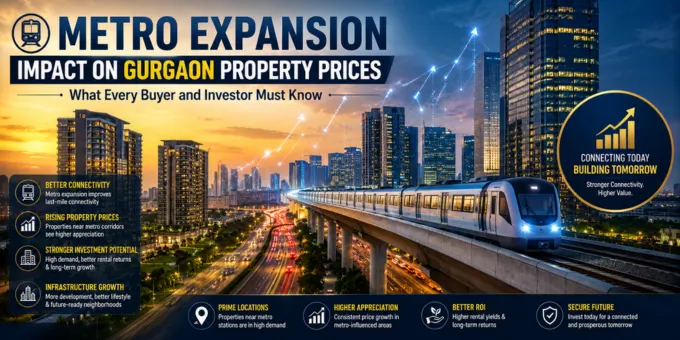
Metro Expansion Impact on Gurgaon Property Prices Complete Guide
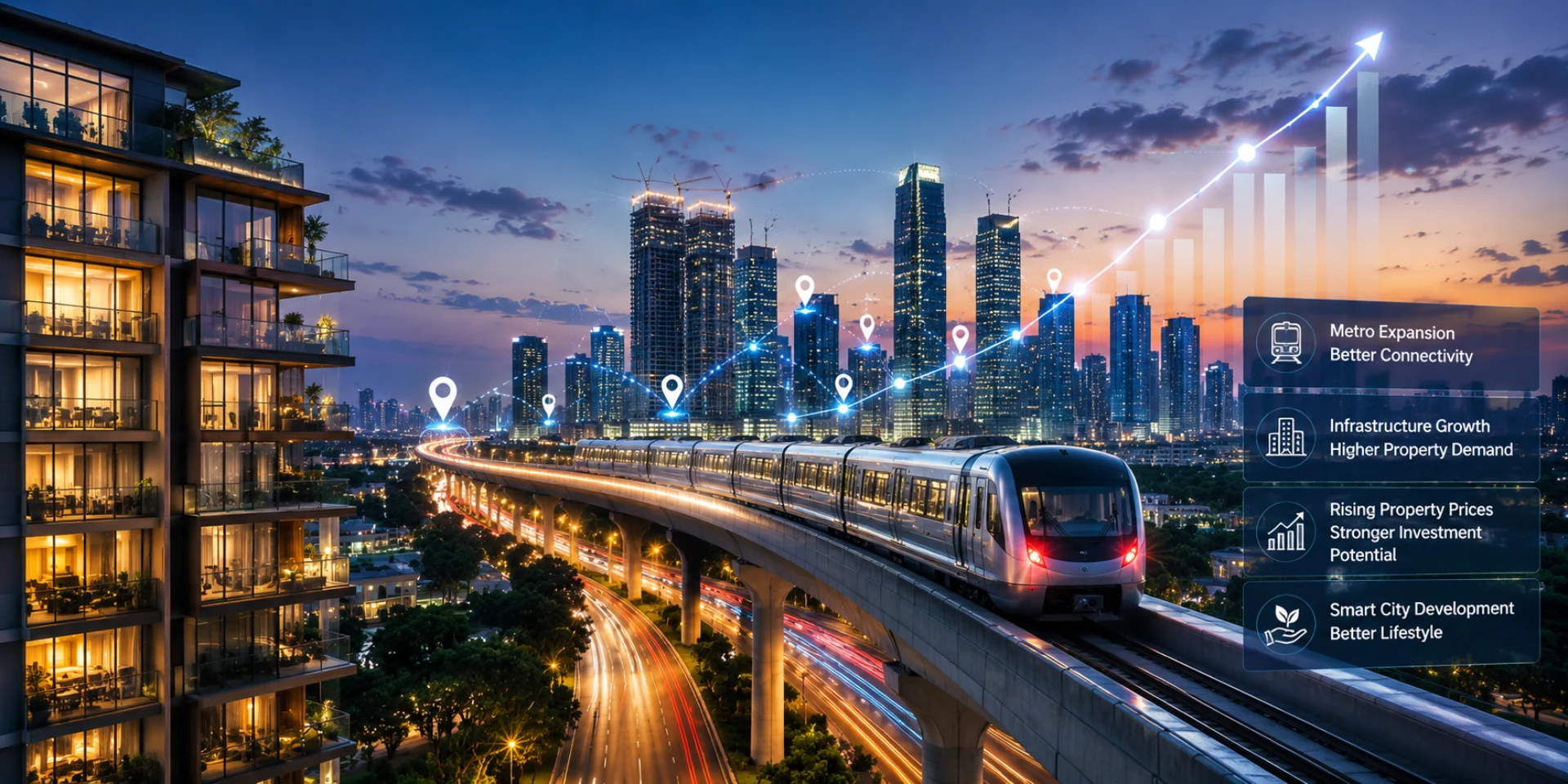
I have been working in the Gurgaon real estate for over a decade. And honestly, very few things have moved the needle on property values here the way metro expansion has. The metro expansion impact on Gurgaon property prices is something I see playing out every single month — not in research reports, but in actual deals, actual buyer conversations, and actual price movements on the ground.
People often ask me: should I wait for a better time to buy? My answer is usually the same. Stop waiting for the metro to open. By then, you have already missed the best prices.
In this piece, I want to walk you through exactly what is happening — which sectors are moving, why buyers are behaving differently, what the Dwarka Expressway corridor really means for investors, and where I personally see the biggest opportunities right now. Whether you are buying your first home or adding to a portfolio, this should give you a clearer picture.
Why Metro Connectivity Moves Property Prices — A Ground-Level View
Here is something most buyers do not fully appreciate until they experience it firsthand. A metro station does not just add a train stop. It fundamentally changes the livability of an entire neighborhood.
Think about what happens after a metro station opens in a sector. Retail shops follow. Cafes open. Auto-rickshaw and cab availability improve. Grocery stores expand. Schools and clinics start opening nearby because more families are moving in. The neighborhood transforms from the inside out.
For a buyer, that translates into very real benefits:
- Commute to Delhi NCR business hubs drops from 60-90 minutes to under 30 minutes
- You stop being dependent on your car every single day, which adds up in fuel and maintenance costs
- Your property becomes easier to resell because the next buyer will see the same connectivity value
- Rental demand stays consistent because working professionals always want metro access
That is the real reason metro connectivity and Gurgaon real estate values are so closely linked. It is not just about the train. It is about the entire ecosystem that grows around a metro line over time.
Metro Expansion Impact on Gurgaon Property Prices: What the Data Actually Shows
I want to be careful here about throwing random numbers around. But based on consistent market tracking, here is what we see in Gurgaon, specifically:
- Sectors within a 1 to 2 km walking radius of an operational metro station show 15 to 25 percent stronger price appreciation than comparable sectors without that access.
- Rental demand in metro-adjacent zones holds up even when the broader market softens. I have seen landlords in Sikanderpur and MG Road fill vacancies in under three weeks while similar properties in outer sectors sit empty for months.
- Commercial spaces near metro stations in Gurgaon command rent premiums of 20 to 35 percent over non-connected equivalents. Businesses will pay more to be where employees can actually reach them.
- Metro route announcements alone — without a single brick being laid — have historically triggered 8 to 12 percent price bumps in Gurgaon sectors that were previously ignored by investors.
That last point deserves to be repeated loudly. The best time to buy near a planned metro station is before the construction starts — not after the ribbon is cut. Once the metro opens, everyone already knows about it and the prices reflect that.
How Gurgaon Metro Expansion Has Genuinely Changed the Way People Buy Property
Ten years back, I would sit with buyers and the conversation was mostly about which developer to trust, what the apartment size was, and whether the price per square foot was fair. Metro barely came up.
Today, metro is often the first filter. Before anything else, buyers want to know: how far is the nearest metro station? Can I walk there? Will my family be able to use it?
This shift is not subtle. It has completely redrawn which sectors are "hot" and which are not. Sectors that used to be overlooked because they felt too far from the city centre are now among the most actively searched — simply because a metro extension is coming their way.
Some specific behavioral shifts I see regularly:
- Buyers are readily paying 10 to 15 percent more for a flat that has a metro station within walking distance compared to a similar flat that requires a cab ride to reach one
- Demand for 1 BHK and 2 BHK units near metro corridors has shot up sharply, especially among IT professionals and young working couples who want convenience over space
- NRI investors, who are often buying without physically visiting, now specifically shortlist metro-connected sectors because it reduces their risk — connectivity is a verifiable, stable value driver
- Savvy local investors track HRERA filings and GMDA announcements specifically to catch upcoming metro extension plans before they get priced in.
Metro Routes and Property Prices: How Commercial and Residential React Differently
On the Residential Side
For homes and apartments, metro access drives both purchase demand and rental demand at the same time. That is a powerful combination. When a sector gets metro connectivity, more people want to buy there AND more people want to rent there — which pushes both capital values and rental income upward simultaneously.
The Yellow Line sectors — IFFCO Chowk, MG Road, Sikanderpur, Guru Dronacharya — are the clearest proof of this in Gurgaon. These areas have consistently beaten neighboring sectors on price growth for the better part of fifteen years. Metro access is a big reason why.
On the Commercial Side
Commercial real estate reacts even more sharply to metro proximity. A company choosing between two office spaces will almost always prefer the one where their employees — including those who cannot afford a car or prefer not to drive — can reach the office comfortably by metro.
This is why Golf Course Road and MG Road continue to command premium commercial rents despite newer micro-markets emerging elsewhere in the city. Metro connectivity keeps businesses anchored there. Property prices near metro stations in Gurgaon on the commercial side hold their floor even in slow market phases.
Best Sectors Near Metro in Gurgaon Right Now: Where I Would Put My Money
Let me be direct about this rather than give you a generic list. The sectors worth watching are the ones sitting in the path of confirmed or announced metro extensions — not necessarily the ones already connected.
Sector 58 to 115 — The New Gurgaon Belt
This stretch is where a lot of the action is heading. Road infrastructure is already solid. Prices are still reasonable compared to established Gurgaon zones. And the upcoming metro extensions put these sectors directly in the path of future connectivity. Early investors here are buying growth potential at current prices — which is exactly the right time to do it.
Sectors 45, 46, and 47 — The In-Between Zone
These sectors are sandwiched between existing metro lines and upcoming extensions. Schools are already here. Markets are established. The community feel is good. Families looking for a balance of current livability and future price growth will find these sectors very practical.
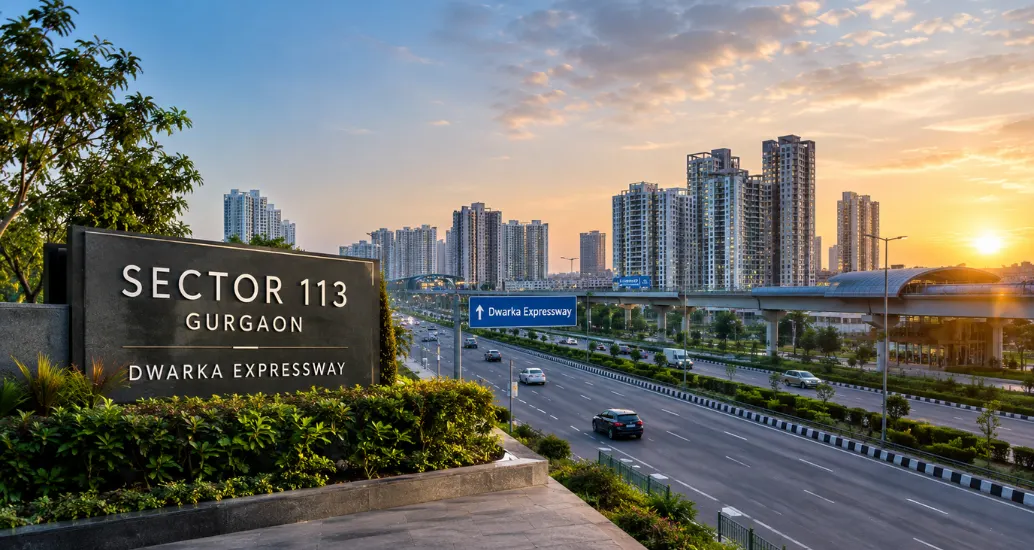
Dwarka Expressway — Sectors 99 to 115
I will cover this separately below because it genuinely deserves its own discussion. For now — if you are looking at gurgaon real estate growth over the next five years, this corridor is hard to ignore.
Golf Course Extension Road — Sectors 65 to 75
Already a legitimate premium address in Gurgaon. Once metro access comes to this corridor, I fully expect prices here to close the gap with Golf Course Road, which is among the most expensive micro-markets in NCR. That gap represents real upside for current buyers.
Dwarka Expressway Metro Impact: Why This Corridor Is the Biggest Bet in Gurgaon Real Estate
If someone tells you they missed the Gurgaon real estate boom of the 2000s, the next boom they should not miss is the Dwarka Expressway. Understanding the metro expansion impact on Gurgaon property prices means really understanding what is happening along this corridor.
When the expressway itself opened after years of delays, properties here appreciated sharply almost overnight. Developers who had bought land early made significant gains. End-users finally got a fast, usable road connecting them to both Gurgaon city and the airport.
Now add metro connectivity to that picture. Here is why the Dwarka Expressway metro impact is so significant:
- Direct airport access within 20 minutes puts this corridor in a unique position for both business travelers and airline crew housing demand
- South Delhi residents who want more space without an unbearable commute are actively looking here — metro seals that deal for many of them
- Large residential projects from credible developers have already changed the character of this corridor — it no longer feels like a fringe location
- Office parks and commercial hubs are actively developing here, which means jobs are following residents — a healthy, self-sustaining economic ecosystem
- 2 BHK and 3 BHK segments have seen consistent absorption over 24 to 36 months with no signs of slowing
The window where you can still enter this corridor at relatively reasonable prices is narrowing. Experts tracking Gurgaon real estate closely believe 30 to 40 percent upside remains from current levels over the next five years — particularly once metro connectivity becomes operational on this stretch.
Investment Opportunities Near Metro in Gurgaon: A Practical Framework
Not every investor has the same goal. So instead of giving you a one-size-fits-all answer, let me break this down by what you are actually trying to achieve.
If You Want Quick Gains — 1 to 3 Years
Look for sectors where metro expansion plans have been announced recently but physical work has not yet started. This is the phase where prices are still catching up to the news. New Gurgaon sectors, particularly 99 to 108 on the Dwarka Expressway belt, fit this profile well in 2025. Get in before the construction photos start circulating on social media — that is roughly when the next price jump happens.
If You Have a 3 to 7 Year Horizon
Focus on sectors where metro construction is active or recently completed. You get a balance: the neighborhood is already upgrading and becoming more livable, and there is still meaningful appreciation ahead as more residents, businesses, and services move in. Golf Course Extension sectors 65 to 75 sit nicely in this category.
If You Are Buying to Live or Holding Long-Term
Established metro-connected sectors — Sikanderpur, DLF Phase 2, areas around MG Road — give you something the newer sectors cannot: stability. You will not see spectacular appreciation overnight, but your rental income will be reliable, your property will hold value through bad markets, and your daily quality of life will be consistently good.
Metro Connectivity and Rental Income Growth: What Landlords in Gurgaon Are Actually Seeing
I talk to landlords regularly. The ones with properties near metro stations in Gurgaon have a distinctly different experience from those who own property in well-developed but non-metro-connected areas.
Property prices near metro stations in Gurgaon justify themselves in the rental market every single month. Corporate tenants — and there is no shortage of them in a city with Gurgaon's employment base — put metro access near the top of their checklist when hunting for a rental home.
What metro-zone landlords are actually reporting:
- Vacancies rarely stretch beyond 2 to 4 weeks, even in the slower rental months. Compare that to 6 to 10 weeks in sectors without metro access
- Rental yields of 3.5 to 4.5 percent per year are realistic in prime metro-adjacent sectors — decent numbers in a market where most people are chasing capital appreciation
- Corporate tenants typically sign 24 to 36-month lease agreements and treat the property better — meaning fewer headaches for the landlord and more consistent rental income
Luxury Developers and Metro Access: Why Premium Projects Cluster Near Metro Lines
Have you noticed that premium developers almost always launch their flagship projects either on or very close to metro corridors? That is not a coincidence. It is a calculated business decision.
Luxury buyers are not just purchasing square footage. They are buying a way of living. And in 2025, that way of living will increasingly include the freedom to leave the car at home when you want to. Metro connectivity, used as a marketing pillar by Gurgaon real estate projects, is not fluff — it is a genuine amenity that justifies the price point.
Smart premium developers launching projects in upcoming metro-served sectors are essentially playing a calculated time game. The project will be delivered in 3 to 5 years. The metro will likely be operational by then or shortly after. The buyer is paying today for a combination of current quality and future connectivity.
Historically, this combination has worked out well for buyers along corridors like Sohna Road and Golf Course Extension. The ones who trusted the infrastructure story and bought early did significantly better than those who waited for the metro to actually open.
When Strong Developers Meet Good Infrastructure: Why That Combination Matters for Buyers
Here is something I tell every serious investor I work with. Location and infrastructure are necessary. But they are not sufficient. You also need a developer you can actually trust.
Gurgaon has had enough episodes of project delays and developer insolvencies to make buyers cautious — rightly so. When I evaluate an investment opportunity, I look at two things together: is the infrastructure story solid, and is the developer financially sound?
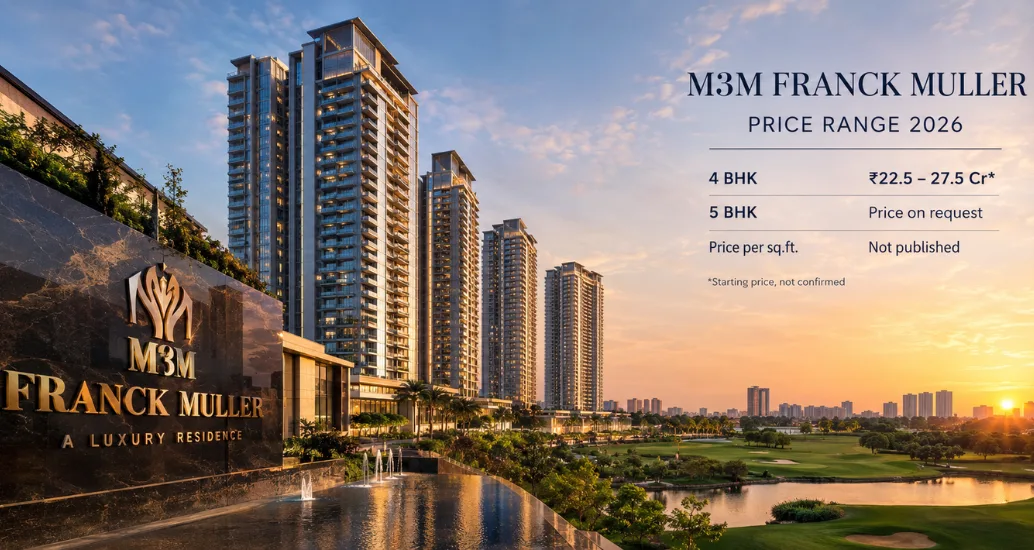
This is why the M3M Zero Debt Expansion Plan caught attention in the market. A major developer signaling that it is growing without debt is essentially telling the market: we are not going to run out of money mid-project. That is exactly the kind of confidence builder that end-users and investors need when committing crores to an under-construction property.
When you pair that kind of developer credibility with a location that has strong metro connectivity, Gurgaon buyers are already seeking, you get a combination that is genuinely hard to argue with. Location risk is mitigated by infrastructure. Developer risk is mitigated by financial transparency. That leaves very few reasons to sit on the fence.
Government Infrastructure Plans and Gurgaon Real Estate Growth: The Bigger Picture
Metro expansion rarely works alone. And Gurgaon is a very good example of that.
Every time a major metro corridor gets confirmed here, you will notice something interesting. Within 6 to 12 months, road widening projects start. Power supply gets more consistent. New commercial complexes break ground. Grocery chains open new outlets. The neighborhood quietly starts transforming before the first train even runs.
That is the multiplier effect of infrastructure investment — and Gurgaon is experiencing it right now across several fronts simultaneously.
The Delhi-Mumbai Industrial Corridor development near New Gurgaon is one of the bigger stories that does not get enough attention in mainstream real estate discussions. Large-scale industrial and logistics hubs are coming up in this belt, and jobs follow factories and warehouses. More employment means more people looking for housing nearby — and that directly feeds residential demand in sectors that were previously considered too peripheral.
Smart City programme investments are also making a tangible difference in daily living quality. Power cuts that were a weekly affair in some sectors are now becoming rare. Water supply is more reliable. Road surfaces are getting maintained more regularly. These are small things individually, but they compound into a meaningfully better living experience — which is exactly what buyers pay a premium for.
The GMDA has also been revising FAR allowances in certain sectors, which is allowing developers to build more efficiently. For landowners and investors, higher FAR means better development potential, which translates into stronger future appreciation.
And then there is the KMP Expressway expansion and the proposed orbital rail network. These are adding connectivity from directions that Gurgaon previously lacked. The city is no longer dependent on just one or two commute arteries — which reduces congestion, improves reliability, and makes more sectors genuinely livable for working families.
When you stack all of this on top of the metro expansion story, gurgaon real estate growth over the next decade has a very solid structural foundation. These are not isolated projects. They are interconnected investments that reinforce each other.
The Future of Gurgaon Real Estate After Metro Expansion: A Realistic Long-Term View
I get asked this question often — has Gurgaon peaked? Is there still room to grow?
Honestly, I think people who are asking that question are not looking closely enough at what is actually happening here.
Gurgaon is still absorbing new corporate campuses at a pace that very few Indian cities can match. Multinational firms, mid-size IT companies, co-working operators, and D2C startups continue setting up offices here. Each of these brings salaries, brings people, and brings housing demand. And as that workforce grows younger and more mobile, metro connectivity Gurgaon real estate is increasingly built around becomes the single biggest driver of where they choose to live.
Now, what does that mean in concrete terms for investors?
Based on the track record of established metro corridors in Gurgaon, annual capital appreciation of 8 to 12 percent in well-located metro-adjacent sectors is a realistic expectation — not a best-case scenario. On top of that, rental yields of 3.5 to 5 percent in prime investment opportunities near metro corridors are achievable, particularly for well-maintained 2 BHK and 3 BHK units in buildings with good amenities.
Add those together and you are looking at 11 to 17 percent total annual returns in the best-positioned locations. That is a number that holds up well against most other investment options available in the Indian market.
The other angle worth noting is what happens to currently affordable sectors once metro connectivity arrives. Several New Gurgaon sectors and Dwarka Expressway pockets are priced well below what established metro zones command today. The gap between these two price points is the opportunity. Historically, that gap closes meaningfully once metro lines become operational — and the investors who entered early capture that movement fully.
Gurgaon's corporate base provides a demand floor that is genuinely rare in Indian real estate. Even when broader economic sentiment slows, the city's housing market stays relatively stable because employment demand here does not disappear overnight. That stability, combined with metro-driven appreciation, makes this a compelling market to hold positions in over 7 to 10 year horizons.
Frequently Asked Questions
How much does metro connectivity actually increase property prices in Gurgaon?
Going by consistent market data from Gurgaon specifically, sectors with operational metro access within 1 to 2 km have shown 15 to 25 percent stronger price appreciation than comparable sectors without it. The closer you are to a walkable metro station — ideally under 500 meters — the sharper that premium gets. This is not a projection. You can verify it by pulling actual registration data from Yellow Line sectors versus non-metro sectors from the same period.
Which are the best sectors near metro in Gurgaon to buy property right now?
In 2025, the strongest combination of affordability and future upside sits along the Dwarka Expressway corridor — Sectors 99 to 115 — and in New Gurgaon broadly. For buyers who want to be in an already-connected area today, Sikanderpur and MG Road surroundings remain solid. For a 5 to 7 year investment horizon, Golf Course Extension Road sectors 65 to 75 are worth serious attention.
Is 2025 the right time to invest in Gurgaon real estate?
For metro-corridor focused investment, yes. Infrastructure planning is more advanced and more coordinated than at any earlier point in Gurgaon's development history. Sectors poised to gain metro connectivity within 3 to 5 years are still priced below their eventual steady-state values. That gap between current price and post-connectivity price is the investment case — and it will not stay open indefinitely.
How does the Dwarka Expressway metro impact translate into actual property gains?
The Dwarka Expressway metro impact works on two levels. First, it removes the last-mile problem for people already living here who currently rely on cars or cabs to reach the metro network. Second, it opens this corridor to an entirely new pool of buyers and renters who had ruled it out because of connectivity concerns. Both effects hit at the same time once metro becomes operational — which is why properties here are expected to see a meaningful step-up in values within a defined window.
Does metro expansion benefit commercial property more than residential?
Both gain, but the timeline is different. Commercial property reacts faster because businesses move quickly to lock in metro-accessible office addresses. Rental premiums get priced in within months of a metro opening nearby. Residential appreciation is steadier and less dramatic in the short term, but it is more durable. For investors who want consistent long-term returns without sharp swings, residential metro-adjacent property in Gurgaon is typically the more reliable bet.
What rental yield can investors realistically expect near metro stations in Gurgaon?
In established metro-connected zones like Sikanderpur or MG Road, gross rental yields of 3.5 to 4.5 percent annually are realistic for a well-maintained unit. In emerging sectors along planned metro routes, yields start lower — often 2.5 to 3 percent initially — but climb steadily as the neighborhood fills in and rental competition increases among tenants. A good apartment in a quality building near a metro station in Gurgaon does not stay vacant for long.
Should you invest before or after the metro construction is complete?
Before — every time, if the fundamentals check out. The price appreciation pattern in Gurgaon has been consistent across every metro expansion phase: prices move at announcement, accelerate through construction, and stabilize once the metro opens. By inauguration day, early investors have already locked in most of their gains. Waiting for the ribbon-cutting ceremony means paying for something the market has already priced in.
Conclusion: Gurgaon's Best Real Estate Chapters Are Still Being Written
The metro expansion impact on Gurgaon property prices is not a forecast anymore. It is something buyers, investors, and developers are responding to on the ground right now — with real money and real decisions.
Sectors along Dwarka Expressway, Golf Course Extension Road, and New Gurgaon are drawing serious interest because the infrastructure narrative is no longer speculative. Plans are confirmed. Construction is either underway or imminent. And history tells us clearly that the buyers who moved at this stage have consistently done better than those who waited for certainty.
The connection between metro connectivity Gurgaon real estate values and long-term appreciation is one of the most dependable patterns this city's property market has produced. Better transportation access brings more residents, which brings more services, which brings more businesses, which drives more demand for housing. That cycle does not break easily once it starts.
For anyone thinking seriously about gurgaon real estate growth over the next decade — whether you are buying your first home, adding a rental property to a portfolio, or making a long-term wealth creation bet — metro connectivity is not just one factor among many. It is the lens through which everything else should be evaluated.
The city is still building. The best-positioned sectors are still accessible. The window is open — but these windows tend to close faster than most people expect.
 Sumit Mishra / Property Counselor
You Must Read:
 Residential